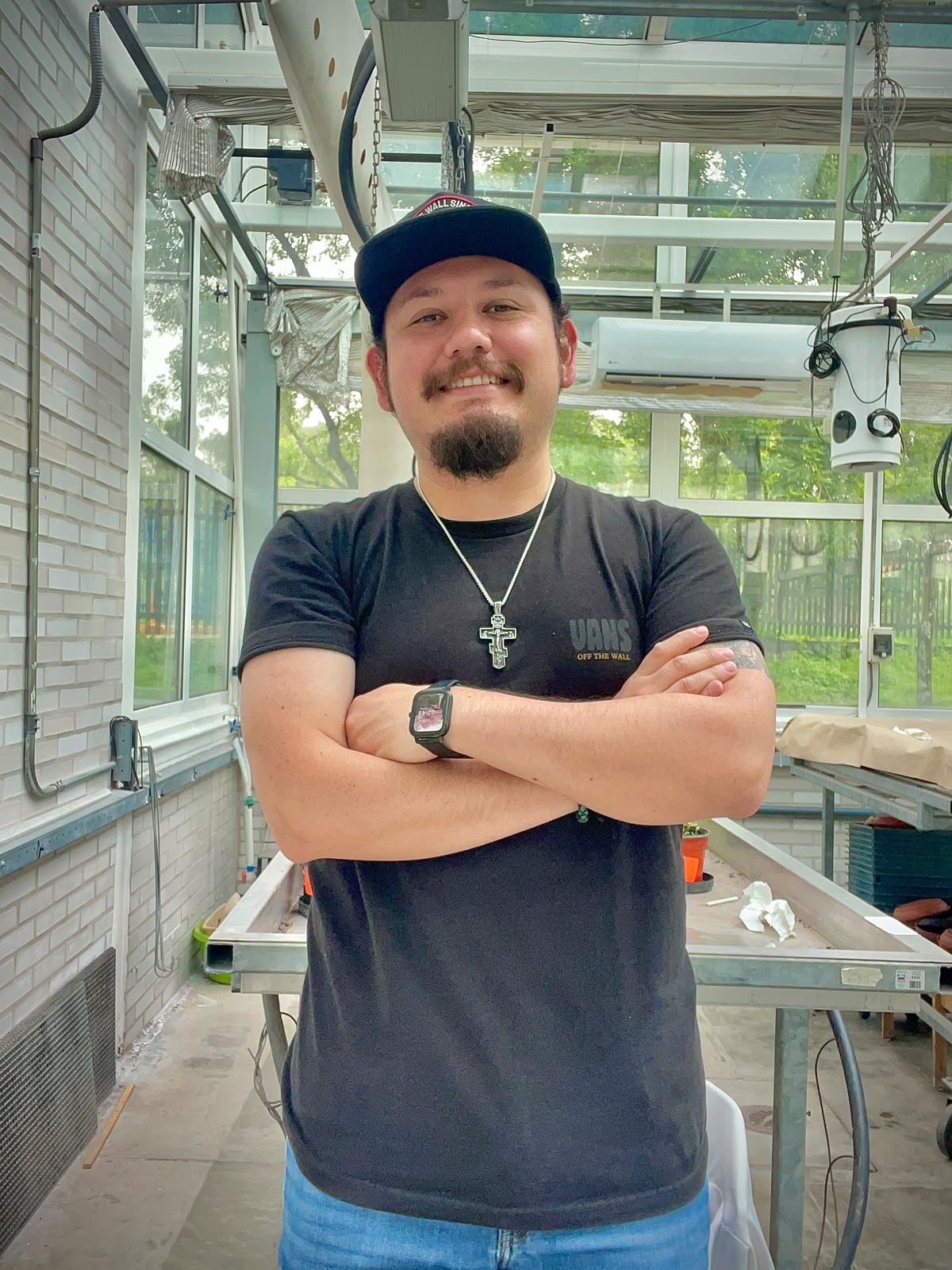
Eduardo J. Aguilar-Rangel, PhD, is a postdoctoral researcher at the National Autonomous University of Mexico (UNAM), where he investigates the effects of long-term wastewater irrigation on environmental microbial communities. His research integrates environmental microbiology, microbial ecology, metagenomics, and bioinformatics to understand how human activities influence microbial diversity, ecosystem functioning, antimicrobial resistance, and the dissemination of mobile genetic elements.
His scientific background includes research in applied microbial biotechnology, particularly the use of microorganisms for the production and modification of antigens with potential applications in tuberculosis research. This experience provided him with a strong foundation in microbial physiology, molecular biology, and the biotechnological exploitation of microbial systems.
His current research focuses on agricultural soils from the Mezquital Valley in central Mexico, a region that has received untreated wastewater irrigation for more than a century. Using metagenomic and 16S rRNA gene sequencing approaches, he studies changes in microbial community composition, biogeochemical functions, the soil resistome, and the association of antimicrobial resistance genes with plasmids, integrons, insertion sequences, and other mobile genetic elements.
His broader research interests include microbial biogeochemistry, environmental antimicrobial resistance, and the ecology of microorganisms across interconnected environments. In addition to agricultural soils and wastewater, he has studied groundwater microbial communities, examining how surface activities, water infiltration, and environmental gradients may shape subsurface microbial diversity and function.
Email: edaguilar [at] ciencias.unam.mx
 Microbiomics - Microbial Ecogenomics